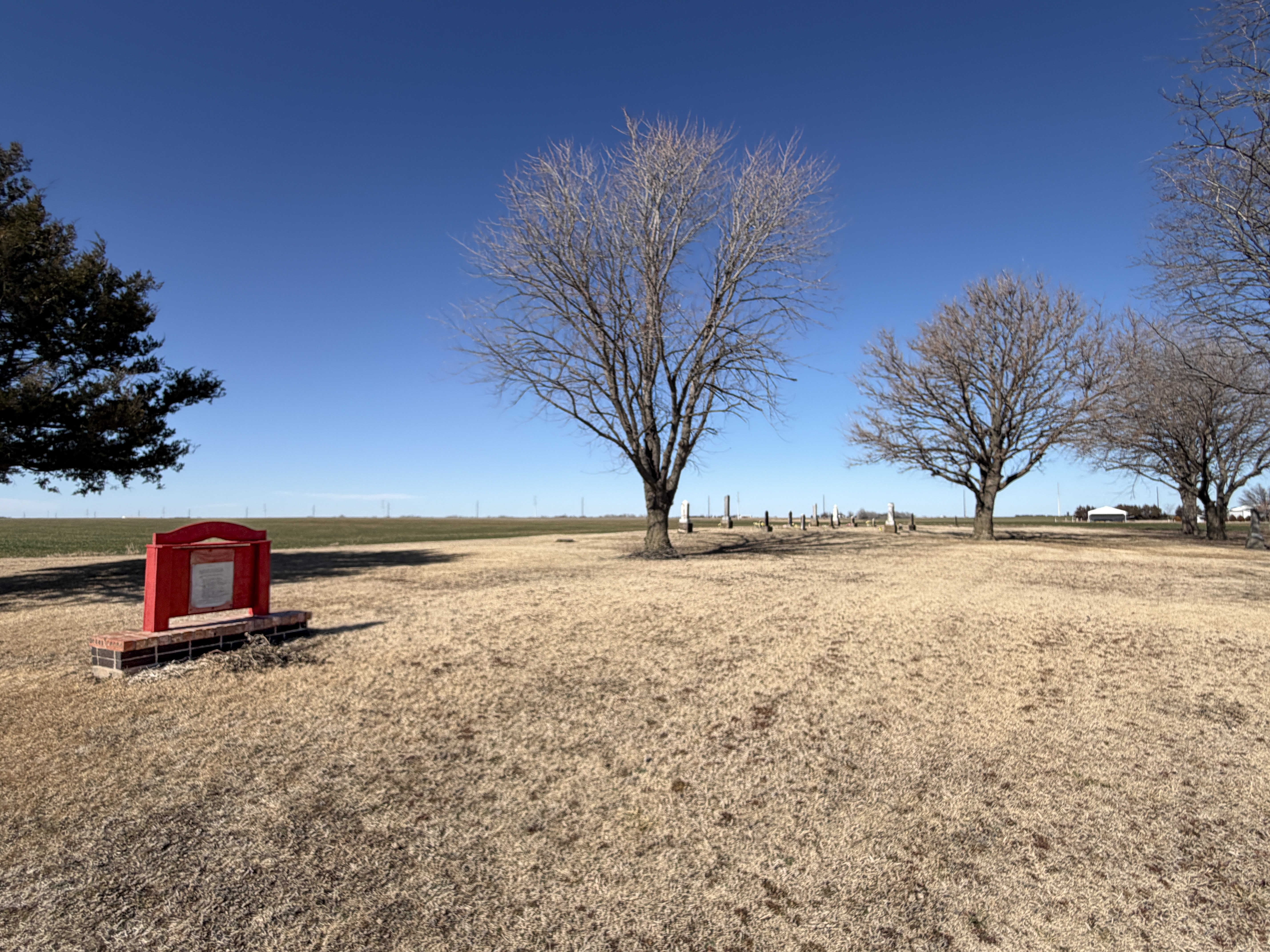
This modest little cemetery in rural Marion County near the vanished town of Aulne is the final resting place for some of the residents of the Marion County Poor Farm, which was active from 1890 to 1964.

Marion County Poor Farm was considered a unique feature of the county, not just because it was self-supporting and often turned a profit, but because it had its own cemetery. There are just 35 known/marked burials at this cemetery, which is owned and maintained by Marion County.
Marion County Poor Farm
Please note: the Marion County Poor Farm building is not abandoned! It has an owner, and she does not want you to trespass or damage anything on the property.

The Marion County Poor Farm was built in 1890 to house the poor, indigent, and “more unfortunate citizens” of Marion County. The farm went by many names, including the Marion County Poor Asylum, the Marion County Poor House, Marion County Cedar Rest Home, and Cedar Rest.

Marion County Poor Farm was once considered “one of the richest in the state,” as it was completely self-supporting for many years, costing the county nothing to run. The farm produced a considerable amount of wheat, corn, and oats, and they managed livestock which gave them butter, eggs, and milk.

The farm used their harvest to make food, and any excess was sold to help pay for the farm’s needs. For many years the farm made an annual profit of a couple hundred dollars, which was added to the county coffers.

The poor farm also provided adoption services. Unwed mothers would come to the farm to deliver their babies, and some babies were put up for adoption quickly afterwards. Their availability was advertised in the local paper.

Other times, older children would be available for adoption, their parents either dead, gone, or otherwise unable to provide for them anymore. “Anyone wishing to take a child” could get one at the poor farm.

During its early years, the farm was managed by William Kerley Palmer, who was responsible for managing every aspect of the 160 acre farm — the buildings, the crops, the livestock, the residents, and the staff.

Palmer was credited with being “one of the best Poor House keepers” in Kansas.

The successes of the poor farm were touted widely and often, and for good reason. The buildings were well-constructed, the grounds were well-managed, and the entire operation was a money-maker for Marion County. The poor farm maintained a good reputation throughout its documented history, and even hosted weddings.

Mary was widowed by 1900 and still at the poor farm.
Despite all the good news, the poor farm also had a darker side.

When the horrors of forced sterilization and castration and other inhumane practices by Dr. F. Hoyt Pilcher at the Winfield State Hospital were exposed by journalists in 1894, the Marion County Poor Farm was also accused of treating their residents the same way.

No specific individual was named, but “the Republican keeper” and “the Republican manager” was blamed for the treatment, and that keeper/manager was William Kerley Palmer.

Just like with Winfield State Hospital, the horrific accusations and dark history of this facility were forgotten by the general public (or hidden from them) and aren’t generally mentioned when discussing the history of the Marion County Poor Farm.

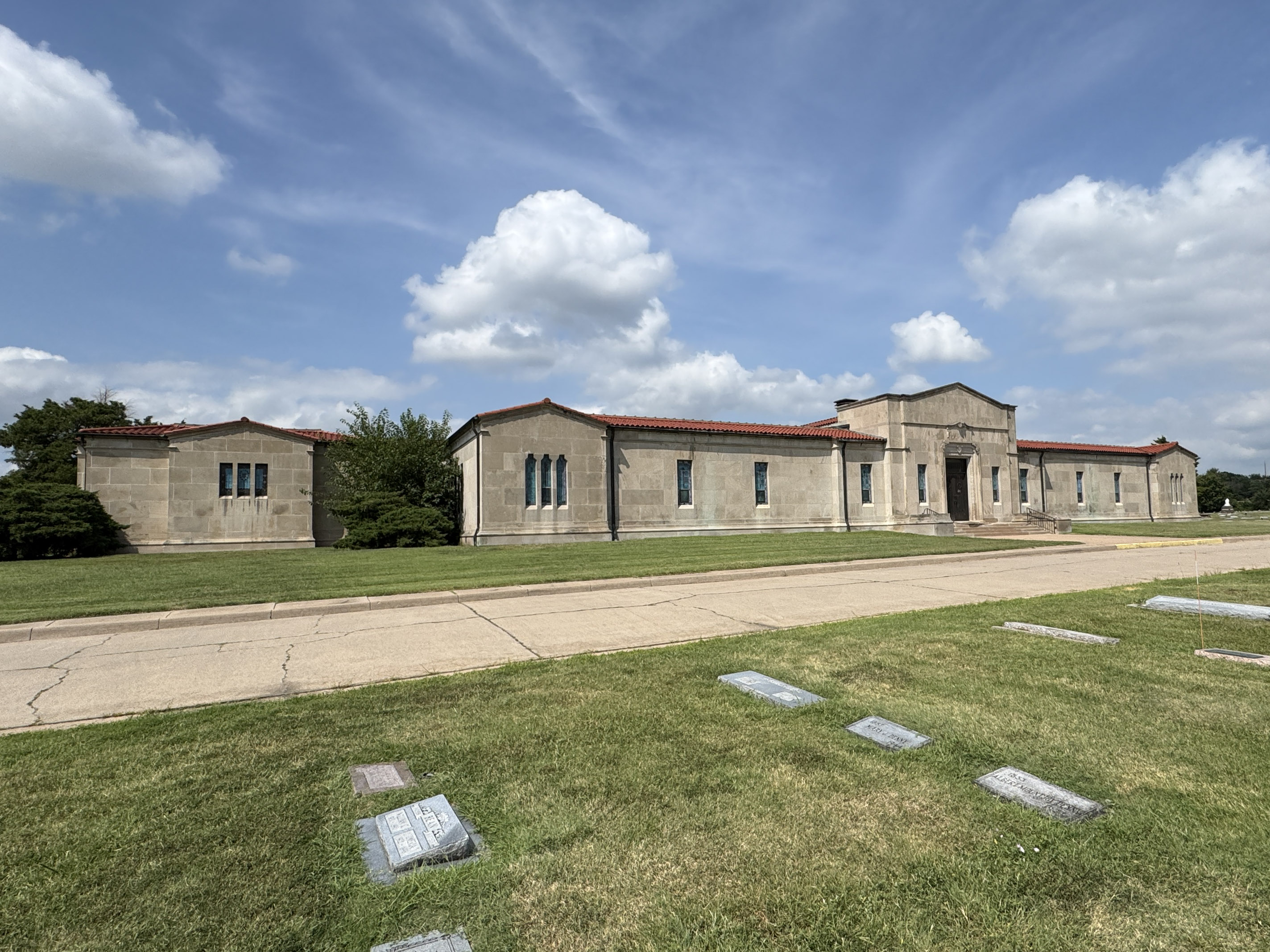
Marion County Poor Farm’s main building is on the Register of Historic Kansas Places and was named one of the 7 most endangered buildings in Kansas in 2022. The application for the Register of Historic Kansas Places says the building was designed and built by Fred Scheaffler, a “well-known stone mason” from Hillsboro who “cut and shaped the stone with his artisan’s hammer.”

However, newspapers from the era suggest that Clyde Parsons, the state architect from Topeka, designed the building. Parsons was mentioned in a detailed summary of the farm’s cost, which also stated that Wakefield & Sons was the contractor. I didn’t see a mention of Fred Scheaffler or his artisan hammer.

Marion County sold the property in 1964, except for the cemetery, which remains owned and maintained by Marion County.
Burials at Marion County Poor Farm Cemetery
About half of the gravestones at Marion County Poor Farm Cemetery are marble rounded tablet style.

Some don’t have full names or their names are misspelled, and none have birth or death dates, making research with limited resources difficult.

All of these gravestones appear to have been made and placed at the same time, so they may not mark the actual burial locations of the individuals they memorialize.

Other names are so common, it’s almost impossible for me to research them without more details that I don’t have. Palmer was the surname of the poor farm’s manager, but this Palmer likely was unrelated.

I did not find any Tuttey’s living in Marion County, but this may be the “Emil Tootey” who was living at the farm in 1900 and was described as “friendless and subject to fits.“

Despite the information on Find a Grave, this gravestone is not for Charles Burton McHenry, blacksmith of Marion County. That Charles died long after the poor farm was closed and is buried elsewhere with his family. There were many other McHenry’s living in Marion County during the decades the poor farm was in operation, but I don’t know which family this Charlie belonged to. There was also a John McHenry living at the farm in 1940, but it’s not clear if they are related.

This could be Emma Burrows (or Burroughs), wife of Morris (or Mark) Yeomans and mother of Lemuel Jay Yeomans. Lemuel was born in Marion County, and when his widowed mother became aged, he may have sent her back home to the poor farm. If so, she probably died sometime before 1937, around age 80.

I found no Heardts in Marion County, so this could be a misspelling of a surname. It could be a relative of Henrich Petrovich Hart (Hardt), a Russian immigrant who came to America in 1905 and lived in Marion County.

This unknown Goertz might be related to Heinrich and Elizabeth Goertz of Marion County, but I didn’t find the connection.

The spelling of Dora’s last name could indicate Portuguese origin, or more likely, people who were unfamiliar with how to spell Bartholomew. Dora appears on the 1910 census as a 42-year-old never married pauper at the poor farm.

The 1910 census shows 82-year-old Henry Easter living at the poor farm with his 67-year-old wife Jane (née Hannah). The census said the couple had ten children, with just four still living. Henry and Jane also showed up on the 1905 Kansas census, so the poor farm was their home for at least five years.

German natives Christian and Bena Eier are listed on the 1900 census as inmates of the Marion County Poor Farm, and an article from the same year indicated they were there due to poverty. They may have been siblings, as the man and woman were both listed as single. Bena was 80 and Christian was 75 that year.


Gus Hawkins, a native of Sweden and a “tramp laborer” began showing signs of insanity in 1901 and was sent to the poor farm. After becoming violent and causing damage to items and property, he committed suicide by hanging himself in his room by his suspenders.

There were some Strouse’s mentioned in Marion newspapers, but I couldn’t find any connection to this Strouse, or what the K might stand for. This could also be a misspelling of the surname Strauss.

69-year-old England native Richard Daw appears on the 1905 Kansas census and 1910 census as a pauper on the poor farm. It says he immigrated here in 1866, but was not a naturalized citizen.

The rest of the gravestones are small flat granite stones that I found no easier to research.

All but one of these flat markers are similar in shape, size, and style, again suggesting that they may have been placed at the same time.

A marker in the very back corner of the cemetery that says “Negro Boy” is the most photographed here. At least one resource says the gravestone once read “Deaf Negro Boy,” suggesting the possibility of original markers that no longer exist. Legend says this unknown boy was found dead on a train car in Hillsboro and was buried here, but no one can explain how they know he was deaf if he was found dead.

These markers have proven difficult for me to research. For example, “Morwrey” might be a misspelling of Mowry or Mowery, but I couldn’t locate William under either name.

Simister is an English surname, but I couldn’t find any Simisters in Marion County during the time the poor farm was open.

“Brundrige” could also be a misspelling, but I was unsuccessful in tracking down any surnames (spelled this way or otherwise) that matched Mandy.

When the railroad came through Marion County, a lot of workers from Mexico did the manual labor. I didn’t find Benigno among them, but that doesn’t mean he wasn’t.

I couldn’t find Bacilo Vazquez either. He didn’t appear among the other Mexico natives on the 1920 census who were “furnished box cars to live in by the railroad company, free of rent.”

Bedstead (or Bedsted) is not a very common surname, but I wasn’t able to find it in Marion County during the years the poor farm was open.

There were Smallwoods living in Marion County at different points, but I’m not sure which (if any) were connected to this Thomas.

There were also plenty of Stewarts living in Marion County, but which family was Walter’s?

67-year-old Mary Jantz appears on the 1920 census as an inmate of the poor farm. The census indicates they don’t know where she was born, where her parents were from, and that she cannot speak English. The 1930 census says the same.

“Delachany” doesn’t appear to be a common surname, and might be a misspelling of something like Delancey or De Lachaine (Delachaine).

I found a Floyd Fowler living in Marion County in the early 1900’s, but I’m not sure if the Floyd I found is this Floyd.

Gottfried Heinze showed up a couple of times in the Marion newspaper, and on the 1940 census as a 70-year-old inmate of the poor farm.

There were several Coopers in Marion County, including a George Cooper who was one of the founders of Peabody. I’m not sure if this George is related to him or not.

Percy McCausland was probably a native of England, even though his surname has Irish origins. He lived in and around Marion County from the 1880’s until his death, probably in 1939. Percy never married and had no know children.

Charles Kuntzleman is another mystery to me. I didn’t find Kuntzlemans living in Marion County, and I wasn’t able to find out anything about Charles.

Only one of the granite markers here is different from the others, and it has birth and death dates. William Moody and his wife Emma were inmates at the poor farm on the 1930 census. Emma died in 1950 and she may also be buried here, but if she is, her grave is not marked.

Additional Resources
Marion County Poor Farm Cemetery, Find a Grave
Marion County Poor Farm, Kansas Historic Resources Inventory
Marion County Poor Farm, Kansas Preservation Alliance & Abandoned Atlas Foundation
County Poor Farm, Genealogy Trails
Marion County Poor Farm Parcel Summary
Marion County Poor Farm and Cemetery, Pullover Adventures, YouTube
Aulne, Kansas – Dead in Marion County, Legends of Kansas
Kansas Ghost Towns, Travel with a Wise Guy, YouTube
Things are looking up at the poor house, Peabody Gazette-Bulletin
Marion County Poor Farm, Register of Historic Kansas Places
Down and out at county poor farm, Peabody Gazette-Bulletin
W. R. Parsons & Son, Architects, History Nebraska
Marion County Poor Farm, Abandoned Kansas
60 Years Ago, Marion County Record
Letters (Morris Yeomans), The Peabody Gazette-Herald, Peabody, KS, Aug 8, 1879
Movement to secure poor farm, The Peabody Gazette-Herald, Peabody, KS, Jan 7, 1881
A Poor Farm, The Florence Herald, Florence, KS, Jan 15, 1881
That Poor Farm Project, Marion Banner, Marion, KS, Jan 20, 1881
Poor Farm Question, The Phonograph, Hillsboro, KS, Jan 28, 1881
Poor Way of Conducting a Poor Farm, The Florence Herald, Florence, KS, Mar 5, 1881
Hotel Arrivals (Yeomans), The Peabody Gazette-Herald, Peabody, KS, May 12, 1887
Hotel Arrivals (Yeomans), The Daily Times, Marion, KS, Mar 9, 1888
Proposals for Poor Asylum, Marion Record, Marion, KS, Apr 5, 1889
C.H. Parsons, poor asylum architect, Marion Headlight, Marion, KS, Jul 4, 1889
Percy McCausland sprained his leg, The Florence Herald, Florence, KS, Jun 7, 1889
Overseer of poor farm appointed, Marion Record, Marion, KS, Dec 20, 1889
Poor Asylum ready for occupancy, The Peabody Weekly Republican, Peabody, KS, Mar 28, 1890
A. Reiger of Elbing, The Peabody Gazette-Herald, Peabody, KS, Oct 2, 1890
Twenty Inmates, The Monroe City News, Monroe City, MO, Aug 23, 1894
Marion County Poor Farm, The Parsons Weekly Eclipse, Parsons, KS, Sep 26, 1894
Marion County Poor Farm Charges, The Topeka State Press, Topeka, KS, Sep 27, 1894
Marion County Poor Farm, The Citizen, Howard, KS, Sep 28, 1894
John Kimball, Florence Bulletin, Florence, KS, May 17, 1895
Homes Wanted, The Peabody Gazette-Herald, Peabody, KS, May 7, 1896
Married, Marion Record, Marion, KS, Jul 12, 1895
Marion County Poor Farm, Marion Record, Marion, KS, Jan 3, 1896
The Marion County Poor Farm, Marion Record, Marion, KS, Jan 10, 1896
Not Exactly a Poor Farm, The Morrill Weekly News, Morrill, KS, Jul 24, 1896
Marion County Poor Farm, Hutchinson News, Hutchinson, KS, Jul 29, 1896
Mr. Palmer, Marion Record, Marion, KS, Jul 16, 1897
Marion County Poor Farm, Florence Bulletin, Florence, KS, Aug 20, 1897
Wanted – A Home, Florence Bulletin, Florence, KS, Aug 26, 1898
Marion County Poor Farm, Marion Record, Marion, KS, Mar 2, 1900
Marion County’s Rich Poor Farm, The Peabody News, Peabody, KS, Oct 11, 1900
Marion County asylum annual report, The Peabody News, Peabody, KS, Oct 11, 1900
This Poor Farm Pays, The Peabody Gazette-Herald, Peabody, KS, Oct 25, 1900
Marion Not Nemaha, The Centralia Journal, Centralia, KS, Oct 26, 1900
Poor Farm has 10 Boarders, The Oketo Herald, Oketo, KS, Dec 6, 1900
A Worthless Old Bum, The Western Call, Beloit, KS, Mar 15, 1901
Suicide at the Poor Farm (Hawkins), The Peabody News, Peabody, KS, Jun 26, 1901
Suicide at the Poor Farm (Hawkins), The Peabody Gazette-Herald, Peabody, KS, Jun 27, 1901
Gus Hankins (Hawkins), Kansas Farmer and Mail and Breeze, Topeka, KS, Jun 28, 1901
W.K. Palmer, Marion Record, Marion, KS, Jul 12, 1901
Marion County Poor Farm, Kansas Farmer and Mail and Breeze, Topeka, KS, Jul 12, 1901
The Marion County Poor Asylum, Marion Record, Marion, KS, Aug 8, 1902
Marion County Poor Farm, The Bern Gazette, Bern, KS, Aug 15, 1902
Marion County Poor House, The Oskaloosa Independent, Oskaloosa, KS, Sep 26, 1902
Marion County Poor Farm, The Peabody Gazette-Herald, Peabody, KS, Mar 3, 1904
W.K. Palmer, Florence Bulletin, Florence, KS, Feb 21, 1907
Hospital Notes (McCausland), The Marion Review, Marion, KS, May 2, 1922
Stone Prairie Life Center, The Herington Times, Herington, KS, Oct 4, 1984


Share your thoughts