On August 24, 1901, a woman named Mrs. Ella Earnest died of an overdose of cocaine and morphine in Wichita, Kansas.
Ella had been living in Wichita on and off for a few years, and the women she lived with in the seedy red-light district of the city knew her as Ella Ruffin. The women said that Ella’s overdose wasn’t her first, and she intended to do it.

On the surface, and to the local papers, Ella was just “one of the earth’s unfortunates, who had allowed herself to drift into the swift channels of debauchery.”
The news reports were crass, there was no obituary printed, and Ella’s family did not claim her body.

I wanted to find out who Ella was, but no one had put the pieces of her family tree together yet. While I didn’t find exactly what I was looking for, I did unearth some surprising information about her and some things that happened near the end of her life.
Ella had three children, two girls and a boy. Her husband, Frank, shot and killed a man he suspected Ella of having an affair with. After an ugly trial and a murder conviction, followed by a last-act pardon for Frank by the governor of Kansas, Ella eventually made her way to Wichita alone, taking up residence in the seedy red-light district on Tremont Street. According to news reports, she attempted suicide three or four times before dying of an overdose of morphine and cocaine. She had just turned 29.
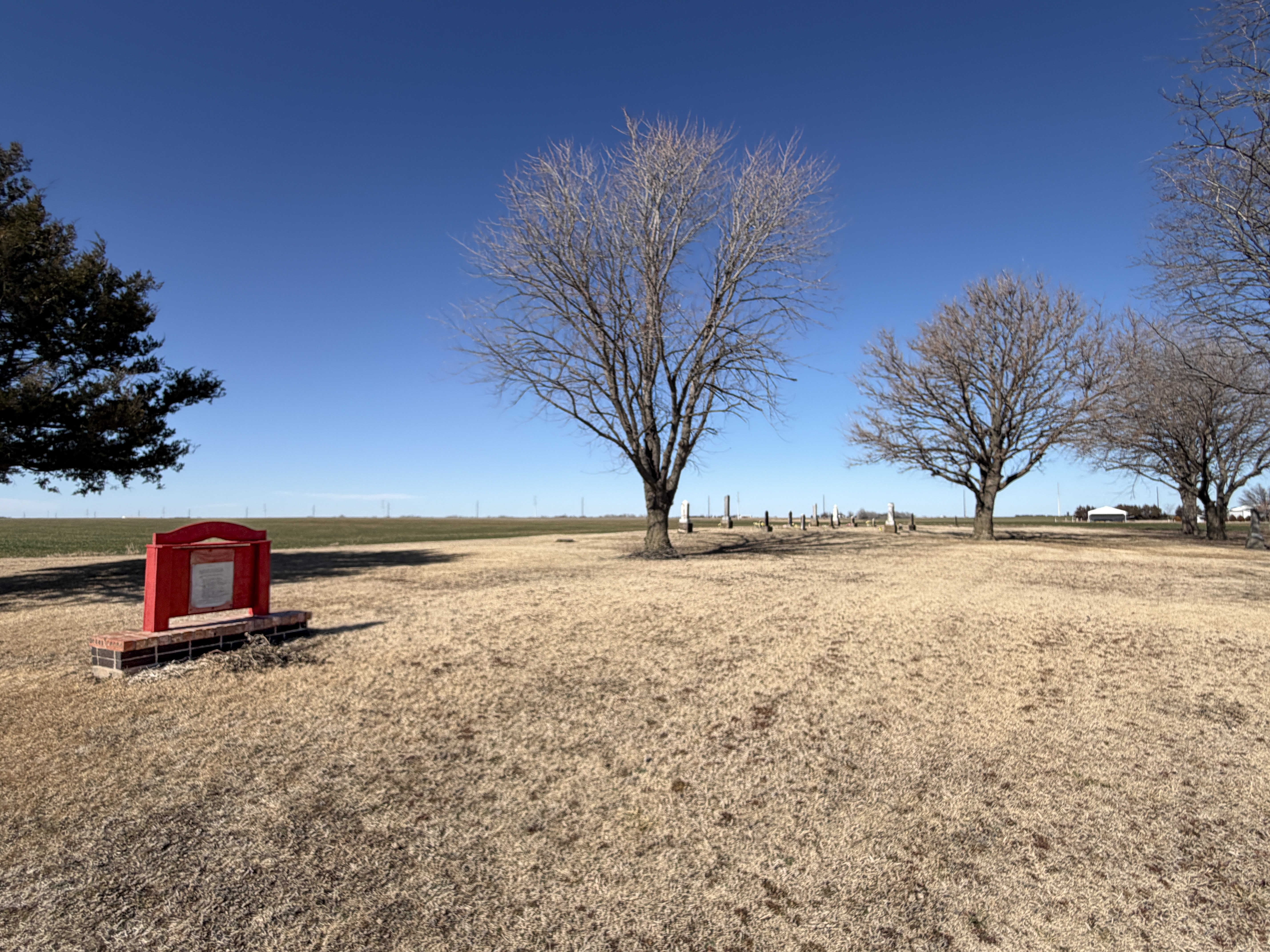
Ella is buried in an unmarked grave near no one she knew.

Martha/Mary Ella Ruffin (1872-1901)
Ella Ruffin was born June 24, 1872 in Linn County, Kansas. By the time she was 15 years old, she had already been married and divorced once. The circumstances leading up to this, and the identity of her first husband, are unknown, but I think it’s safe to assume that early marriage was not Ella’s choice.
Just four months after she was divorced from her first husband, in January of 1888, Ella married James Franklin Earnest (known as Frank), a man who was 10 years her elder. Ella and Frank got married in Alpine, Indian Territory (somewhere in present day Beaver County, Oklahoma). They could not marry in Kansas because Ella’s divorce had just happened; at that time Kansas required a six month waiting period before remarriage. Again, probably a safe bet that Ella was not the one who wanted to rush a wedding.
At age 16, just nine months after her marriage to Frank, Ella gave birth to her first known child, a girl, in the fall of 1888.
Frank was a successful businessman in Ashland, and a business partner in several ventures with James Henry Ruffin, Ella’s father.

Ashland Weekly Journal, Dec 24, 1891

RUFFIN & ERNEST, Proprietors
Ashland Weekly Journal, September 27, 1889
But I don’t think James was Ella’s father.
Who Were Ella’s Parents?
Ella’s mother was a woman named Harriett Catherine Davis. Harriett was born in Missouri, and likely came to Kansas with her family after the end of the Civil War in 1865.
Ella’s father was most likely James’ brother, William D. Ruffin. Harriett seems to have done a little bit of husband swapping.
William D. Ruffin and (Harriett) Catherine Davis were married April 17, 1870 in Linn County, Kansas. Both were 18 years old.

Two months later, in June of 1970, William and Harriett are listed as living together on the Federal census, 18 years old, with no children.

Thankfully we also have the state census records to help piece some things together. The 1875 Kansas Census more clearly shows W. D. Ruffin & Harriett C. Ruffin, now both 24 years old. On this census, we can also see that a child, listed as Martha E. Ruffin, has joined the family.
This is Ella, born June 1872.

Something must have went wrong with Ella’s parents. I wasn’t able to find any clues as to exactly what happened, but we can see the result. William filed for divorce from Harriett, he left town, and Harriett married his younger brother, James. But not exactly in that order.
According to news reports, William left Kansas for Oregon around 1877 to be a sheepherder. His divorce from Harriett wasn’t published in the paper until November 1881.

1881 seems a bit late to divorce, considering on the 1880 Federal census, not only do Harriett and James appear together, but Harriett is clearly listed as the wife of James, and Ella (now Mary E.) is listed as his daughter.

I wasn’t able to find documents confirming a marriage between James and Harriett, other than another census record. In 1900, they said they had been married since 1873, just a year after Ella was born, 4 years before William left town, and somehow a full 9 years before a divorce decree with William was finalized.

We also have local news reports to help piece together the puzzle. William came back to Kansas occasionally to visit his daughter, Mrs. Frank Earnest.

James was also referred to as Ella’s step-father in at least one news report.
Based on these records, it seems somewhat clear that Ella was born to William, but raised by her mother Harriett and her uncle James.
James was the operator of a few hotels in town, including the aforementioned Ashland House, Clifton House, and the Queen City Hotel. Although I have no direct evidence of it, there is some historical indication that the Ashland House and the Queen City Hotel doubled as brothels and saloons.
Prostitution is a part of Kansas history, and many prostitutes (some forced) worked at hotels in cattle towns, like Ashland. Prostitution was tolerated in Kansas cattle towns, and almost treated as necessity because it was so important to the local economy. Income from prostitution supported local businesses, like The Ashland House, and businessmen, like James and Frank.

I have no evidence that Ella was a prostitute, but she was accused of being “of easy virtue” (or open to sexual advances), was documented having relationships with multiple men outside of her marriage, and died in a brothel in the red-light district of Wichita, so it’s possible she was comfortable with this lifestyle because she was raised in it.
It’s also possible that Ella was was sold into marriage early as part of a business proposition. Women were often considered property or servants at this time, so it’s possible that Ella was viewed this way, given she was married twice before age 16, and we know that one of those men was a business partner of her step-father, suggesting the possibility of some kind of arrangement.
James Franklin Earnest (1863-1941)
James Franklin Earnest (Frank) was born in Texas on September 26, 1863. He worked alongside his father as a laborer, first as a wheelwright (building and repairing broken wagon wheels) and later as a farmer. He only attended school for about three weeks, and was not taught to read or write.
Frank migrated to Kansas sometime in the early 1800’s and quickly made a name for himself. Frank was the “Ernest” in the “Ruffin & Ernest” partnership that owned several businesses in town. He supplied the meat, the ice, and the hotel for residents of and travelers through Ashland.


Frank had been in trouble with the law in the past for stealing whiskey, cows, and horses. Sometimes his father-in-law would join in on the action. Not everyone believed that Frank was a thief, based on the tone of some articles.

Sometimes, the charges were dismissed without consequence.

Frank was not only a purported criminal, he was a tough cowboy, determined to keep Kansas wild, and apparently this was known across the state.

He was also reported to have a coyote-killing bulldog which “should be a warning to coyotes that it is not healthy for them near Ashland.” I’m not sure why the local paper was publishing messages to coyotes, but the message seemed clear: Frank had a reputation as a man you did not want to mess with.

When Frank married Ella in 1888, he was 25, and had just opened up a billiard hall in Ashland with Ella’s father, which provided whiskey and other forms of entertainment to locals and travelers. Ella was about to celebrate her 16th birthday.
Who Were Ella’s Children?
Ella gave birth to three known children while with Frank. Their first daughter, Myrtle Aldoe, was born in 1888 and died in 1889, just after her first birthday. Ella was 17.
Myrtle was never recorded on a census, and I could find no birth, death or burial records for her. If not for this news article about her death, there would be no record of her existence.

Ella soon gave birth to another child, a son, in February 1891. There was no formal announcement of the birth, but there was something published in The Ashland Journal that eluded to a new arrival in the family.

Carl, Frank and Ella’s firstborn son, is listed on the 1895 census. Ella must have given birth to another girl around 1893, which we only know from the same census record, but no name is listed.

It’s not immediately apparent, but Ella and her children aren’t living in the same house with Frank at this time; they are living in a separate house, and Frank is living with Ella’s parents.
1895 was a wild year for Ella and Frank, though the trouble probably started long before that. For Ella, this seems to be the beginning of the end.
The Murder of Sid Jackman
In January 1895, Frank Earnest shot and killed a well-known local named Sid Jackman. The men were friends, and up until a few days before the murder, no one suspected any trouble. But it was revealed at trial that Ella and Sid had been sneaking around with each other. Ella was 23; Sid was 32.

The State’s theory was that Sid had been feeding information to the local sheriff about Frank’s cattle thievery, leading to Frank shooting Sid for essentially ratting him out. The entire theory revolved around Frank stealing cattle, Sid working as an informant for the government, Frank discovering that Sid was an informant, and then shooting and killing Sid because of it.
But Frank gave another motive.
Frank said on Friday, January 25, 1895, three days before Sid was killed, he had been working near town when Sid approached, offering him a drink of whiskey. Frank obliged, but said that when Sid handed him the bottle, he noticed Ella’s wedding ring prominently displayed on one of Sid’s fingers.
Frank said he went home and confronted Ella about Sid having her ring, and she came up with a story about Sid borrowing the ring from her because he wanted to “fool a girl in the north part of town.” Frank didn’t believe Ella’s story, but believed she had cheated on him with Sid.
The next day, Frank said he saw Sid and Ella together in town on Main street. It’s unclear exactly what Frank witnessed, but others testified they believed Sid and Ella were alone together for about 15 minutes.
Afterwards, Frank saw Ella in a local store with Sid, so he chased her down, “overtook” her, took her home, and “upbraided” her for being alone with Sid. Frank said she denied being with Sid at first, but eventually confessed that she did meet with him, but only to get her ring back. She also told Frank that Sid had been bothering her, following her around, and bumping into her every chance he could. Ella said that she had told Sid to leave her alone or she would have to tell Frank what he was doing.
Ella claimed Sid said “if you tell him, I’ll kill the son of a bitch.”
While we’ll never know what Ella actually told Frank, or the reasons why she told him what she did, I think it’s possible that this story wasn’t exactly what happened between Ella and Sid.
Frank and Ella stayed at home that weekend without leaving the house, and the tension must have been unreal. Frank claimed that he had lost faith in Ella by this point, and that he “did not sleep with her” after this, but the sheriff would later testify that he saw Frank and Ella being affectionate with one another while he was in custody. The sheriff also testified that Ella visited Frank in jail at least twice, which Frank’s friends found surprising, since he publicly claimed he was done with her.
A few days after Sid flaunted Ella’s ring to Frank, Frank went into town and took his gun with him. Frank and a few friends, including Sid, got together to drink some whiskey at Frank’s butcher shop. At some point, the whiskey ran out, and they all pitched in to get a new bottle. The other men dispersed to get the whiskey, leaving Sid and Frank alone together in the butcher shop.
The only witness to the murder was Frank, who claimed he shot Sid in self defense. Frank said once the other men left, he said to Jackman, “Sid, you are trying to break up my family and have said if I interfere you will kill me; now what are you going to do about it?” He said Sid stood up, made “a gesture,” and said “God damn you, I will kill you.” Frank said he then pulled his gun and fired twice.
Sid’s body was sent to Texas, where he was buried in the historic Kyle Cemetery.
The jury deliberated for about five hours before returning a verdict condemning Frank to death for first degree murder, which was said to be a surprise to everyone. The jury was more swayed by the testimony about stealing cattle, not about the love affair between Sid and Ella.
But based on Frank’s testimony, the reasons why he shot Sid are clear.
Frank reportedly turned pale upon the reading of the verdict, but later told the sheriff, gesturing to his heart “I feel alright here.”
Frank was sent to jail in Ashland before being transferred to Lansing, where he stayed until 1897.
Frank Earnest Pardoned by Governor of Kansas
After Frank was sentenced to death, not only did his attorneys file appeals, but his father-in-law James began directly petitioning for his pardon.

As one of his last acts as a one-term governor, Edmund Needham Morrill pardoned Frank Earnest in January 1897. Frank was released from prison and allowed to return home to his wife and children, almost two years to the day that he shot and killed Sid.

But Frank didn’t go home. It’s believed he packed up and moved to Oklahoma, taking Ella’s parents with him, almost immediately upon his release.
And after his release, Ella made a spectacular escape from Ashland that was reported across Kansas.
Ella Runs Off With Archie Oglesby
In the fall of 1897, Ella went to her step-father’s stable, ordered up his full team of horses and his best buggy and left town with Archie Oglesby, a young newlywed from Oklahoma who had arrived in Ashland just the week before.

The two didn’t make it very far. The Ashland Clipper reported that the pair left on a Tuesday evening and were caught less than 24 hours later. They only made it to Meade (about 35 miles) before being arrested. Both were returned to Ashland to answer for the theft of the horses and buggy.

Newspapers loved this story. Variations were printed across Kansas, and because the story could use a little embellishment to make it more interesting, some reported conflicting and wildly incorrect information.

The Coffeyville Daily Journal, Coffeyville, KS, Sep 17, 1897

The Wichita Eagle, Wichita, KS, Sep 7, 1897
By all accounts, no was was stolen, and no one was 40 or 18. Ella was 25, Archie was 23, and they appear to have gone together willingly.
After being returned to Ashland, Ella was released and she immediately hopped the train that eventually stopped in Wichita, where she would reside on and off for the next four years.
Archie was held in jail for five days before being released without being charged. His wife Lulu came up from Oklahoma, but he refused to speak to her and took off on foot. He made it six miles before anyone caught up to him and forced him to speak with his wife, though the outcome of their discussion was never published.

Just like the journalist in 1897, I haven’t had luck tracking down what happened to Archie or his wife after this.
This is also where I lose track of Ella’s children. Ella skipped town and her two children, Carl, now 6, and an unnamed baby girl, now 4, are said to have been left with their grandparents, James and Harriett Ruffin.
But I can’t find them.
The 1900 census shows Ella’s step-father James, her mother Harriett, and her estranged husband Frank (James F.) all living together in Shawnee, Oklahoma, where they would all live out the remainder of their lives. Carl would have been 9 and his sister would have been 7, and if they were living with their grandparents, we should see them here. But the children are not here.

Ella’s children don’t appear on any census record again that I could find.
They are just gone.
The Death of Ella Earnest
Ella arrived in Wichita sometime after her failed elopement with Archie. We know this wasn’t Ella’s first time in Wichita; during his trial, Frank told of a time when Ella ran off to the Wichita fair without his permission.
Ella started getting in trouble pretty quickly after escaping Ashland. Just a month after she left, it was reported she had been arrested twice; once in Wichita, and once in Kingfisher, Oklahoma. Her crimes were not mentioned, but a $10 fine in Wichita would be in line with the punishment for being an “inmate of a house of ill fame,” i.e. a prostitute in a brothel.

Information on Ella was scarce after 1897, but during the final months of her life, she made the Wichita papers several times. It was suggested then that Ella had attempted suicide 3-4 times before, and her depression was due to “general dissatisfaction with her own life” and “disappointments in love affairs.”
The first time Ella’s suicide attempts made the news was in June 1901, where it was reported a doctor spent hours trying to save her life. Despite suicide being a fairly common occurrence on Tremont Street, Ella’s attempt was apparently so sensational, it was worth a big headline and a lengthy report in the paper.

Some news reports were much shorter and slightly more vague. “Vaccinated herself against living” is a pretty interesting way to say “attempted suicide.”

On August 24, 1901, Ella overdosed on morphine and cocaine again, but this time, she died. Ella was 29 and staying in a brothel on Tremont Street in the red light district, close to where she had overdosed just two months before.

The Wichita Eagle, Wichita, KS, Aug 25, 1901
Again Ella was reported to have suffered from the effects of the drugs for hours, but a doctor was unable to save her this time.

Other newspapers reported Ella’s death in a different way, focused on what a shame she was to her family, and how disappointed they must be in her.


And from what I can tell, her family was ashamed of her, just like her hometown paper reported.
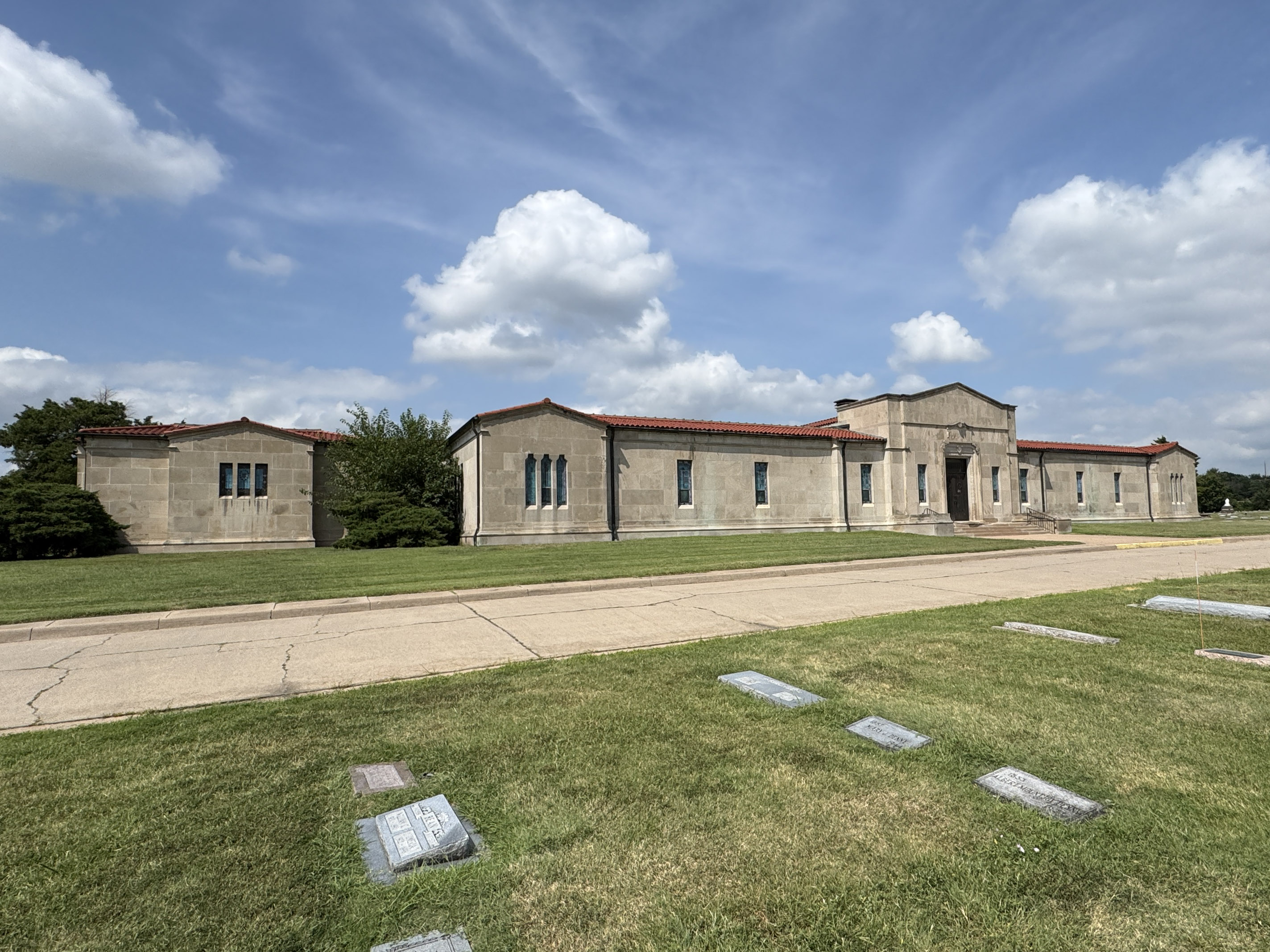
Ella’s body was not sent to Shawnee, Oklahoma for burial, but rather placed in an unmarked grave in Wichita, Kansas with no funeral. Her parents never had any other children, but their graves were engraved “Mother” and “Father.”
Ella’s grave remains unmarked.
After Ella
1897: Frank, James and Harriett all relocate to Oklahoma, abandoning Ella.
1900: Frank is Chief of Police in Shawnee, Oklahoma, a position he will hold for at least a decade.
190?: Frank marries again; second wife is Marie.
1904: Frank’s wife Marie gives birth to a son; they name him Carl. Frank’s first son Carl remains missing from the record.
1905: Frank’s wife Marie gives birth to a son; John Morton.
1913: Frank’s wife Marie gives birth to a daughter; Mary Inez.
1917: Frank’s wife Marie gives birth to a son; James Vernon.
1927: Ella’s mother Harriett dies in Shawnee, Oklahoma at age 75.
1941: Frank dies in Shawnee, Oklahoma at age 77.
1943: Ella’s step-father James dies in Shawnee, Oklahoma at age 90.
Sources:
Martha Ella Ruffin Ancestry Tree
Sinners and Saints: Vice and Reform in Kansas, Kansas State Historical Society
Cowtowns, Kansas State Historical Society
Prostitution and Changing Morality in the Frontier Cattle Towns of Kansas
Sydney Johnston Jackman, Find a Grave
James Franklin Earnest, Find a Grave
James Henry Ruffin, Find a Grave
Harriett C Ruffin, Find a Grave
Kyle Cemetery, Texas Historical Markers
Case of State vs. Hez Frost and Frank Earnest, Ashland Weekly Journal, Ashland, KS, Oct 14, 1887
Ruffin & Earnest opening pool hall, Ashland Clipper, Ashland, KS. Mar 15, 1888
A Cowardly Arrest, Ashland Weekly Journal, Ashland, KS, Apr 12, 1889
Myrtle Earnest Dies, Ashland Clipper, Ashland, KS, Nov 28, 1889
Frank Earnest Purchases Ruffin’s Share, Ashland Clipper, Ashland, KS, Jul 29, 1892
Frank Earnest “Wild Wooly West,” Ashland Clipper, Ashland, KS, Apr 14, 1893
Warning to Coyotes, Ashland Clipper, Ashland, KS Dec 28, 1894
Murder in the First Degree, Ashland Weekly Journal, Ashland, KS, Jun 28, 1895
Sid Jackman Shot, Meade Globe, Meade, KS, Feb 7, 1895
The Earnest Case Decided, Ashland Clipper, Ashland, KS, Nov 15, 1895
J.H. Ruffin Petitions for J.F. Earnest Pardon, Ashland Clipper, Ashland, KS, Mar 6, 1896
Home Again, Ashland Weekly Journal, Ashland, KS, Jan 14, 1897
Frank Earnest Free, Ashland Clipper, Ashland, KS Jan 15, 1897
An Elopement, Ashland Clipper, Ashland, KS, Sep 3, 1897
Oklahoma Man Steals a Woman, The Wichita Eagle, Wichita, KS, Sep 7, 1897
Archie Oglesby, The Robinson Index, Robinson, KS, Sep 10, 1897
The Elopers Discharged, Meade Globe, Meade, KS, Sep 16, 1897
Woman Steals a Husband, The Coffeyville Daily Journal, Coffeyville, KS, Sep 17, 1897
In Pursuit of Ella, The Elk City Enterprise, Elk City, KS, Sep 24, 1897
Ella Earnest Arrested in Kingfisher, Ashland Clipper, Ashland, KS, Oct 29, 1897
She Didn’t Die, The Wichita Beacon, Wichita, KS, Jun 13, 1901
Ella Earnest, The Wichita Star, Wichita, KS, Jun 14, 1901
Took Two Drugs, The Wichita Eagle, Wichita, KS, Aug 25, 1901
She Won Out, The Wichita Star, Wichita, KS, Aug 30, 1901
Suicide Suffers Greatly, The Saturday Evening Kansas Commoner, Wichita, KS, Aug 29, 1901
Ella Earnest Died, Ashland Clipper, Ashland, KS, Aug 29, 1901



Leave a Reply to Mary Elizabeth HarboldCancel reply